Crypto Holders Face a Massive Regulatory Warning
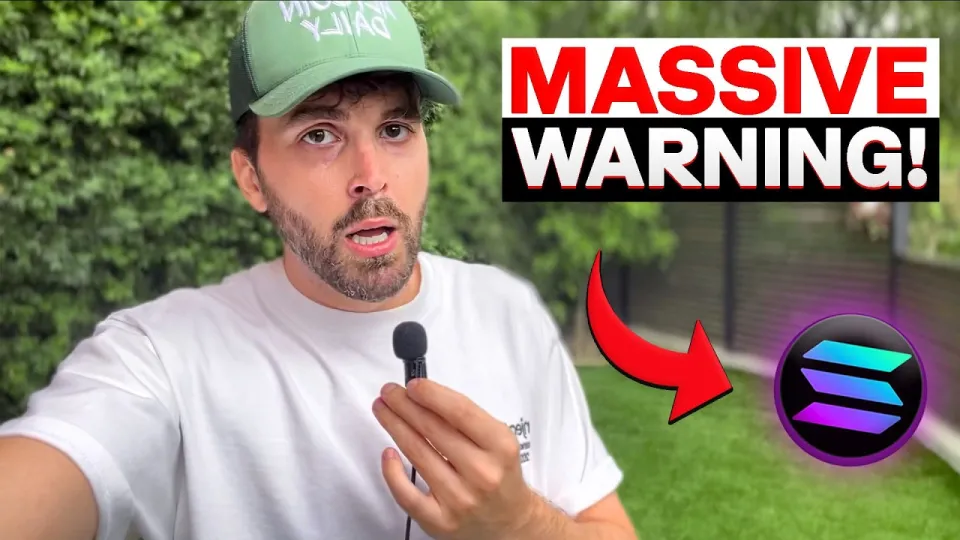
Video: My MASSIVE Warning To Crypto Holders
Want articles like this for your own video to promote it on YouTube and Google? Order them through the Telegram bot @sat_sit_bot. Articles with your video embedded are written and posted by the bot itself — on popular topical sites (no ads). Free trial — 50 articles.
· based on the channel Altcoin Daily
Key takeaways
- The video frames regulation, not price volatility, as the main structural risk for crypto holders.
- Tokens whose value does not depend on a specific jurisdiction's approval are presented as more resilient.
- Self-custody and platform choice are treated as separate risks from which coin to hold.
- Altcoin Daily has been publishing market commentary for nine years, as noted in the video.
- The video's promotional links offer a $500 Weex deposit bonus and a Bitunix registration offer.
Crypto holders are being warned that the biggest threat to their portfolios is not a price drop but regulation and the way tokens are designed around it. The core argument is that assets whose value depends on a single jurisdiction's approval carry structural risk, while assets that do not need that approval can survive a hostile rulebook. The video breakdown from Altcoin Daily lays out that warning, and viewers can also unlock a $500 deposit bonus on Weex through the link shared in it.
What the crypto warning actually covers
The warning is about exposure, not prediction. It targets three separate things that holders tend to blur together: which asset you own, where you keep it, and which platform sits between you and the market. Regulation can hit all three at once, but it hits them differently. A token can be legally fine to hold while the exchange listing it is under pressure, and an exchange can be fully compliant while the token itself is classified as a security in a major market.
The practical takeaway is to separate those layers before adding to a position. Ask whether the asset needs a specific regulator's blessing to keep functioning, whether the platform holding it has a clean path to operate in your jurisdiction, and whether you actually control the keys. If any answer is unclear, that is the risk to size down, not the daily candle.
Why jurisdiction-independent tokens get the attention
Tokens that do not depend on one country's approval are framed as the more durable part of a portfolio. The logic is straightforward: a network that keeps producing blocks, settling transactions and paying fees regardless of which regulator is unhappy has a floor of utility that a permissioned product does not. That does not make such assets safe from price swings, but it removes a category of risk that no amount of chart analysis can price in.
This is why the discussion keeps returning to large, liquid networks with broad validator sets and years of uptime rather than to tokens whose entire thesis is a pending approval. When a holder is deciding where to add exposure, the question to ask is what the asset does on a day when its friendliest regulator changes its mind.
Self-custody and platform risk for crypto holders
Holding on an exchange is a counterparty decision, not a storage decision. The warning treats platform choice as a live risk even for holders who never trade: an exchange can restrict withdrawals, delist an asset, or change its terms, and the holder has no vote. Self-custody moves that risk onto the holder, where it becomes a key-management problem instead of a corporate one.
A workable split looks like this:
- Keep only working capital on any platform, sized to what you would accept losing to a freeze.
- Move long-term positions to a wallet where you control the seed phrase, stored offline.
- Test a small withdrawal first whenever you move funds to a new venue.
- Keep a written record of which assets sit where, so a rule change does not force a rushed decision.
The video's own promotional links point to trading venues, which is exactly why the distinction matters: a bonus is a reason to try a platform, never a reason to concentrate a portfolio there.
Typical questions crypto holders ask after the warning
Viewers consistently push back on two points, and both deserve direct answers. The first is whether the warning means avoiding mainstream brokerage-style apps altogether. The honest answer is that the warning is about understanding what you own through that app: whether the shares or tokens are held in your name, whether withdrawal to self-custody is possible, and what happens if the provider restricts access. An app is not automatically unsafe, but it is a layer of risk that should be counted.
The second recurring question is about specific tokens and whether a warning applies to holding the asset or to using a protocol built on it. Those are different exposures. Using a lending or staking protocol puts your capital into a smart contract and a governance process; holding the token is a market position. A regulatory warning can affect one without touching the other, so the decision has to be made per use case rather than per ticker.
A third theme in the discussion is timing. Some holders argue the real risk is staying out of the market entirely, and that is a legitimate position, but it is a bet on adoption outpacing regulation rather than an argument that regulation does not matter. Both can be true at once: missing a cycle is costly, and ignoring a rule change that delists your asset is also costly.
How to position before the next cycle
Positioning starts with an inventory, not a forecast. List every asset, every venue and every wallet, then mark which of them depends on a single regulator, a single company or a single key. Anything that appears in all three columns is the first thing to reduce. This is a mechanical exercise, and it is far easier to do while nothing is breaking than during a withdrawal freeze.
After the inventory, set rules in advance: a maximum share of the portfolio on any one platform, a maximum share in any asset whose legal status is contested, and a fixed schedule for moving excess to self-custody. Writing those rules down before the next headline is what turns a warning into risk management rather than a mood.
Where to find the offers mentioned in the video
All links shared in the breakdown are collected here for reference:
Treat both as promotional terms with their own conditions, not as investment advice or a signal about either venue's regulatory standing.
The bottom line on this crypto warning
Altcoin Daily's breakdown is a reminder that crypto risk in 2026 is as much legal and operational as it is financial, and holders who separate asset risk from platform risk from custody risk will be better prepared for whatever rulebook arrives next. The video does not promise a crash or a rally; it asks holders to check what their positions actually depend on. Anyone acting on it should start with the inventory and the self-custody rules, then decide whether a promotional offer like the Weex deposit bonus fits their plan at all. The author of the original analysis is the Altcoin Daily channel.
Source: My MASSIVE Warning To Crypto Holders · Markdown version
Questions & answers
Does this warning mean I should sell my crypto?
No. The warning is about structural exposure, not a sell signal. It asks holders to separate asset risk from platform risk and custody risk, then reduce whichever layer depends on a single regulator or a single company. Selling everything is one response, but so is moving long-term positions to self-custody and keeping only working capital on exchanges.
Is it risky to hold crypto on a brokerage-style app?
It adds a layer of counterparty risk rather than making the position automatically unsafe. Check whether the assets are held in your name, whether you can withdraw to self-custody, and what the provider can do if it restricts access. If any of those answers is unclear, treat the position as more exposed than one you control directly.
Do tokens that ignore regulation really carry less risk?
They remove one category of risk, not all of them. A network that keeps running regardless of which regulator is unhappy does not depend on a pending approval, but it still has price volatility, liquidity and smart-contract risk. The point is that no chart analysis can price in a sudden rule change, so jurisdiction-independent assets are framed as more durable.
Should I take the deposit bonus offers mentioned in the video?
Only as a promotional term with its own conditions, never as a reason to concentrate funds on one venue. Read the requirements, test a small withdrawal first, and keep the platform share of your portfolio within a limit you set in advance. A bonus does not tell you anything about a venue's regulatory standing.